
A Closer Look at the ZAG M
July 22, 2026 - Guilhem
In the previous post, I laid out the main design principles behind the ZAG. One of the key ideas was resilience: thanks to its removable motor and battery mounting plates, our frame's lifespan no longer depends on that of its electrical components. These plates sit at the very heart of how our bikes are designed. Offering a non-electric model, built around the same frame, was therefore a natural step.
How did it come about? What drove the choice of a Pinion gearbox? What is it built for?
In this new blog post, I take a detailed look at our mechanical model: the ZAG M.
Since we unveiled our prototype more than a year ago, one question kept coming up:
"When's the motorless version coming?"
Because we designed this frame to be modular from the outset, fitting a gearbox in place of the motor happened naturally.
Choosing the Pinion gearbox
After testing the Pinion gearbox, we decided to offer our mechanical model in this configuration only for now.
There were several reasons for this:
A very wide gear range (568 to 600% vs 520% at most for a 12-speed derailleur), which makes it possible to offer a very low first gear (around 14 gear inches) while keeping a top gear high enough to pedal comfortably at 30–35 km/h. A first gear like this lets you ride at 4 km/h at a cadence of 60 rpm: ideal for climbing a steep hill under load, without wrecking a knee or arriving exhausted*. You spin, and it moves along – a major asset for a cargo or touring bike!
Shifting while stopped: extremely useful on a cargo bike meant to carry weight, especially when you've stopped on a climb without having had time to downshift.
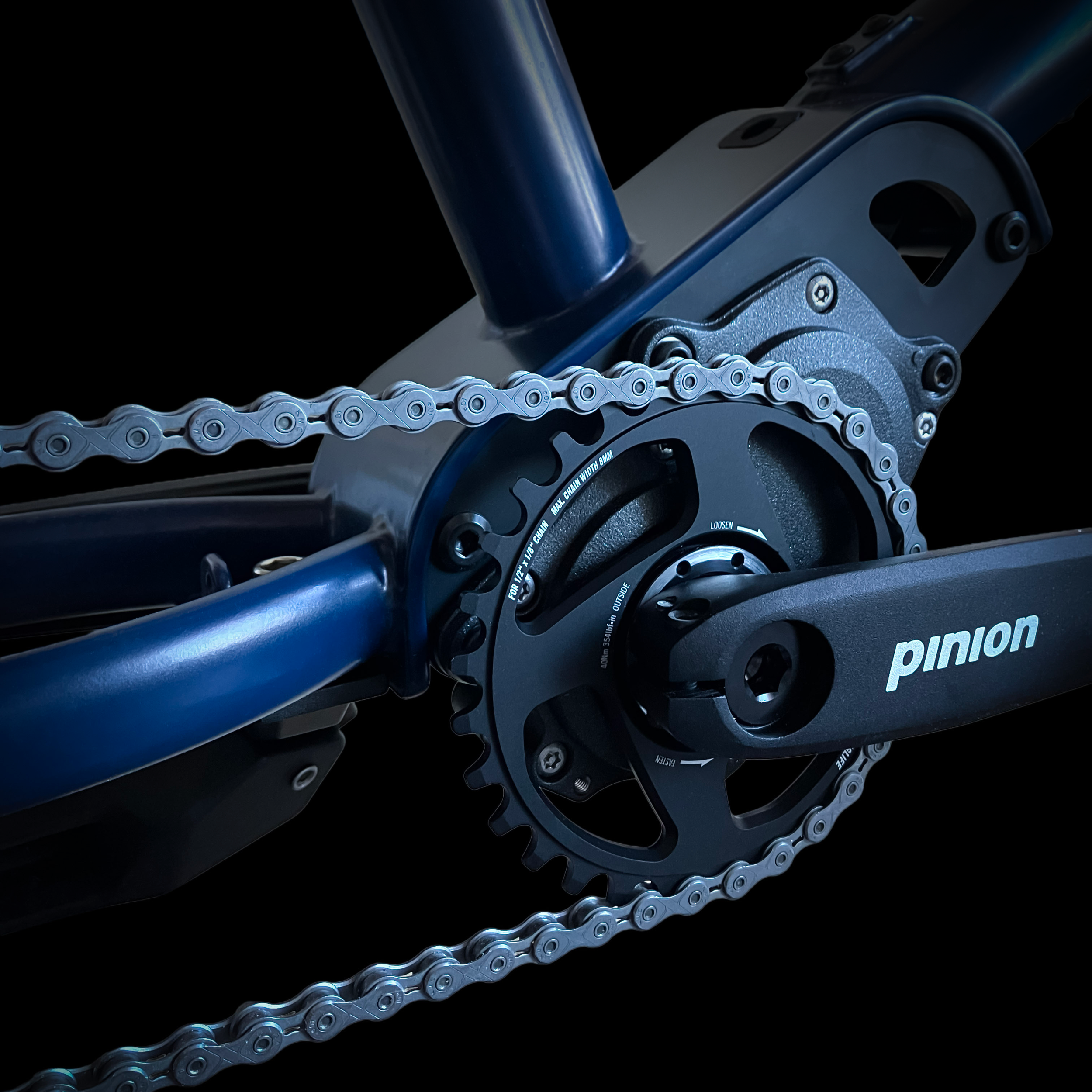
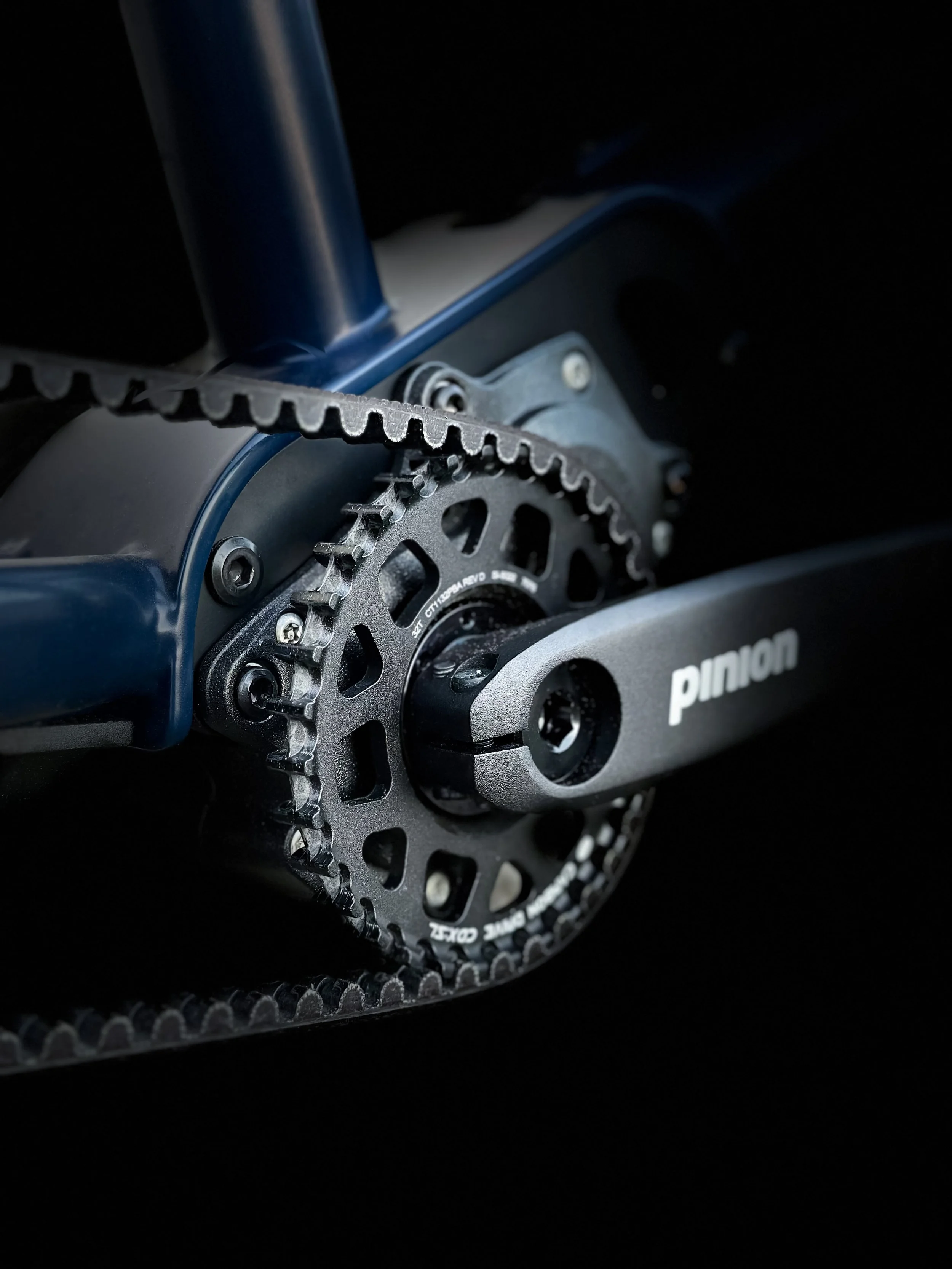
The choice between chain or belt: the gearbox lets you run either a belt (Gates CDX, extremely durable and quiet – our ZAG M+ model) or a single-speed chain (wider and stronger than a standard chain – our ZAG M model).
Maintenance kept to a strict minimum: an oil change every 10,000 km… and that's it. You can count on a lifespan of at least 20,000 km for the belt and 10,000 km for the chain.
Proven reliability: Pinion has been building gearboxes since 2012 and has earned a reputation for outstanding reliability, particularly among long-distance travellers.
A single frame
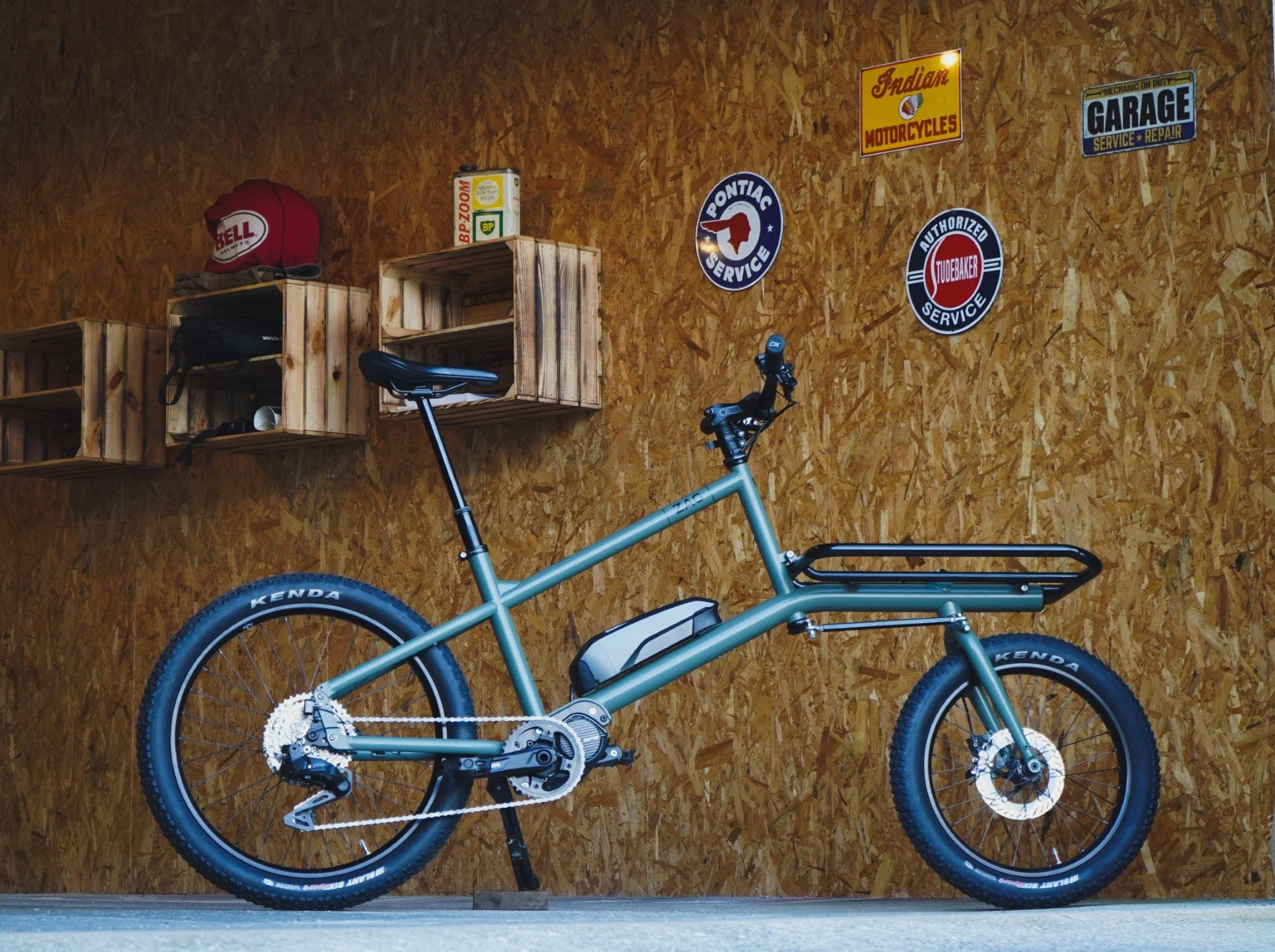
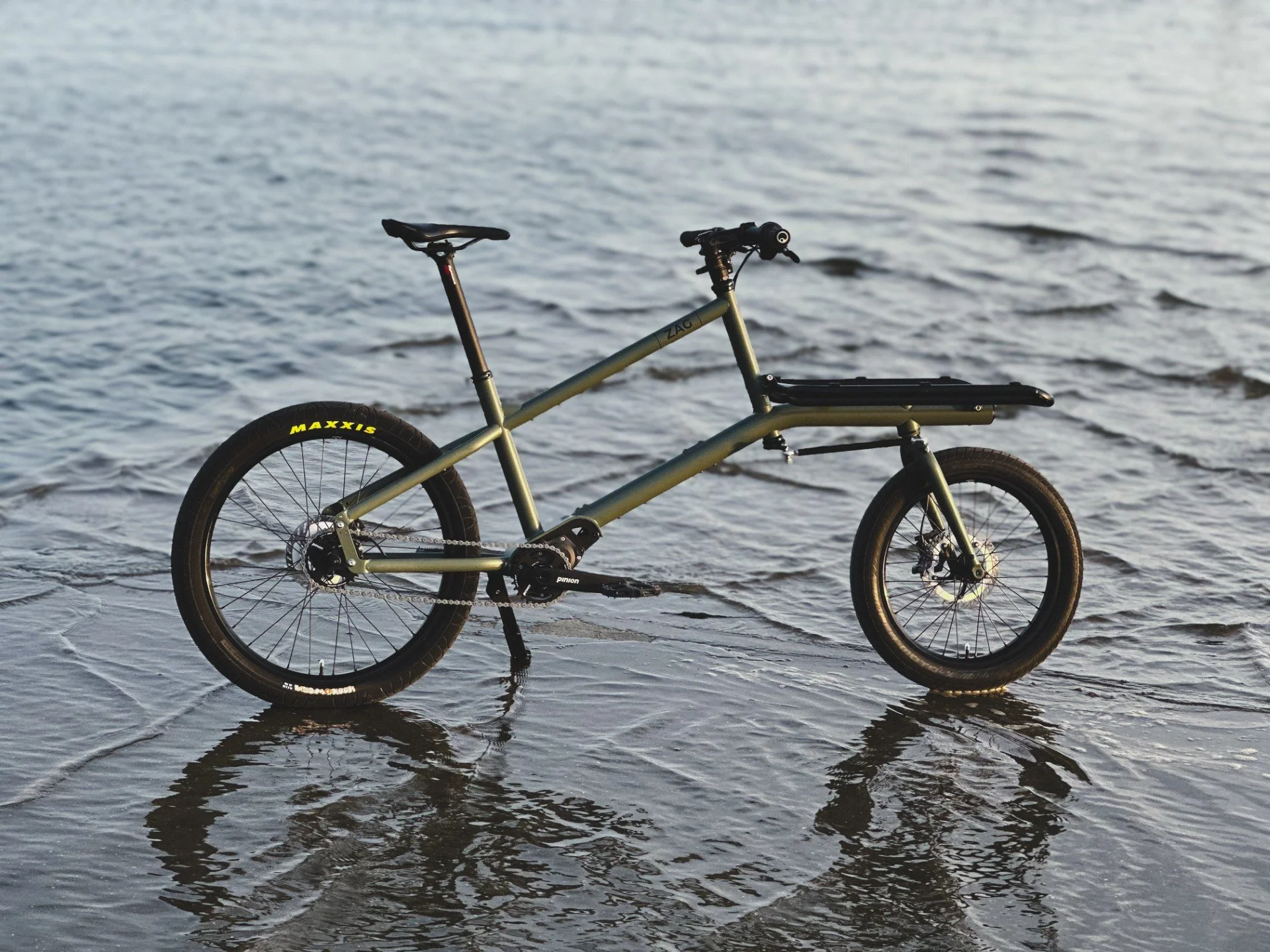
The ZAG M has the same frame, fork and rack as the ZAG E, along with the same carefully selected high-quality components. The only difference lies in the plates: the motor plates on our electric model are replaced by plates specific to the Pinion gearbox, and the battery plates are removed.
It's this modularity that makes ZAG a cargo bike that is not only durable but also adaptable: if your needs or wishes change, it will be possible to electrify a ZAG M – or, conversely, to "mechanise" a ZAG E.
Who is the ZAG M for?
For lovers of simplicity, after a lighter cargo bike (7 kg less than the ZAG E), easier to carry and simpler to use.
For travellers who want to get off the beaten track for the long haul.
For riders who'd rather rely on their legs alone.
For professionals looking for a simple, highly durable bike, capable of carrying nearly 180 kg**, with maintenance kept to a minimum.
And, of course (as with the electric model) for anyone after the sheer riding pleasure, even under load, that the ZAG's geometry and torsional rigidity deliver.
What about a derailleur drivetrain?
While we're won over by the Pinion gearbox for all the reasons above, we know that a classic derailleur drivetrain remains close to many riders' hearts.
We're working on an adapter that will allow a standard crankset to be fitted, letting us offer a mechanical model with a derailleur – as a complete bike and as a frameset kit. See you in 2027!
Learn more
Watch Transition Vélo's team put the ZAG M+ to the test (from 4:57):
And for more details, head straight to the shop:
*A ZAG loaded to its maximum (total weight of 200 kg), riding at 4 km/h on a 10% gradient, requires a pedalling power of around 250 watts – which a reasonably fit cyclist can comfortably sustain for a short time.
**The frame, rack, fork and steering assembly were tested by the German laboratory EFBE for professional use (200,000 cycles per test instead of the usual 100,000), at a total loaded weight of 200 kg. Excluding the bike weight, this leaves a payload capacity of 177-178 kg.